
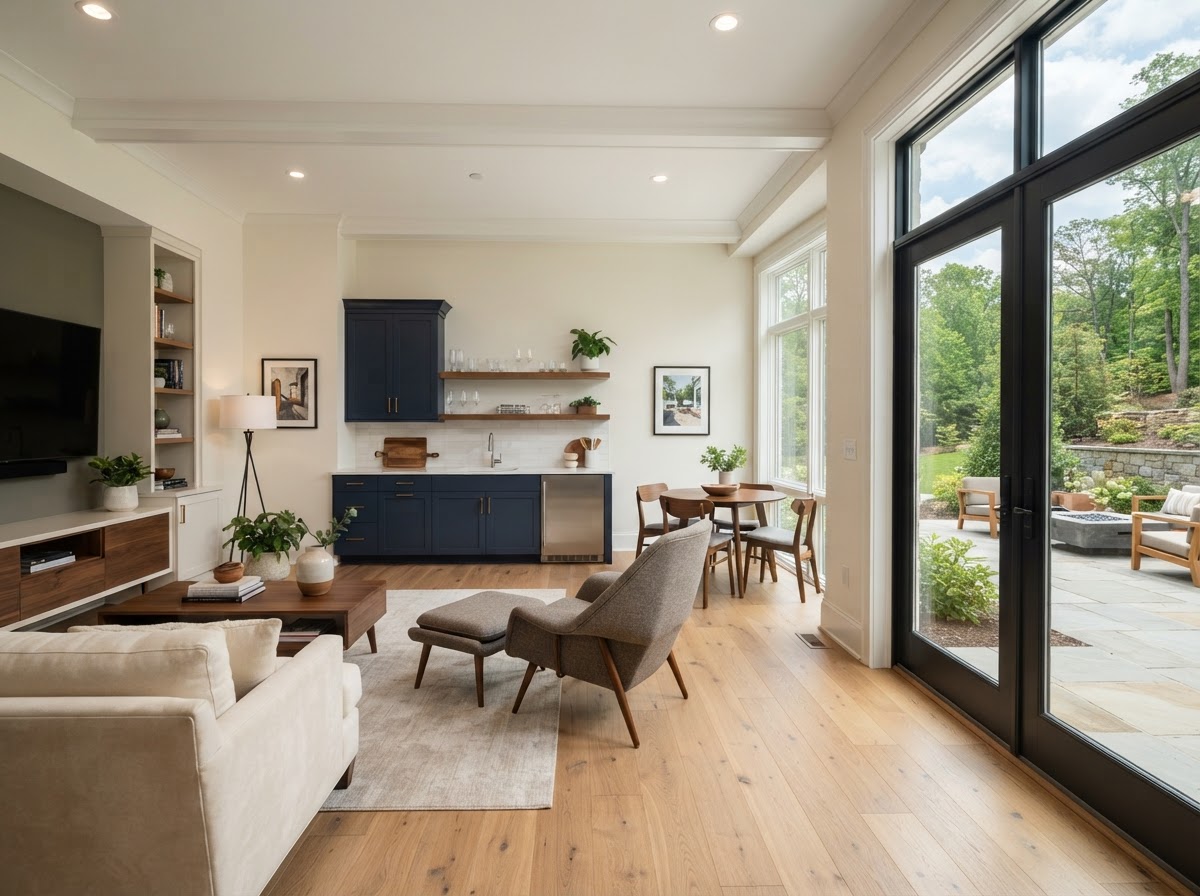
Can I Convert My Basement Into a Legal Apartment?
Not necessarily — finishing a basement and creating a legally recognized apartment are not automatically the same thing. A legal basement apartment requires compliant egress, adequate ceiling height, a kitchen and bathroom, proper utilities, moisture control, and applicable permits and — where rental is intended — licensing. Each of these must be verified for the specific property and jurisdiction.
Many basements are finished as living space. Far fewer meet the requirements to be a legal apartment. The difference comes down to egress, ceiling height, utilities, and the permits and licenses that govern rental use.
Tell Us About Your Property
Request an ADU, in-law suite, garage or basement conversion feasibility evaluation.
What Makes a Basement Apartment Legal
A legal apartment is a unit that meets building code requirements for residential occupancy and, where applicable, rental licensing. A finished basement without these features is living space, but not a legal apartment.
Sleeping areas require compliant emergency escape — typically a door or window to the exterior with minimum dimensions and a clear path.
Habitable rooms must meet minimum ceiling height; many older basements fall short and may require excavation or design adjustments.
A legal apartment needs cooking facilities and a bathroom with proper plumbing, venting, and access.
Electrical, plumbing, and HVAC must meet residential standards, and the unit may require separate or upgraded service.
Basements are below grade; moisture control, waterproofing, and drainage are essential for habitability.
Creating a legal apartment requires permits, and renting it may require a rental license; requirements vary by jurisdiction.
Finished Basement vs Legal Apartment vs ADU
There is a spectrum: a finished basement, a legal apartment, and an ADU. Each carries different requirements, and the intended use determines which applies.
Finished Basement
Conditioned living space without independent cooking, egress, or separate access — comfortable, but not a legal apartment or ADU.
Legal Apartment
A self-contained unit meeting building code for residential occupancy, with egress, kitchen, bath, and utilities — and subject to rental licensing where applicable.
Accessory Dwelling Unit
An ADU is a specific regulated use that may involve additional zoning review beyond building code; not every legal basement apartment qualifies as an ADU.
Egress Window or Door
A basement bedroom typically requires an emergency escape opening meeting minimum dimensions; a walkout door may satisfy egress if it provides direct exterior access.
Rental Licensing
Where rental is intended, a legal apartment may require a rental license, registration, and compliance with local rental rules — separate from building permits.
Basement Apartments in Bowie & Prince George's County
Bowie-area basements vary widely — some are walkouts with direct exterior access, others are fully below grade with limited egress options. The feasibility of a legal basement apartment depends heavily on which type you have and whether egress can be made compliant.
Throughout Prince George's County, basement apartments that are rented may also be subject to rental licensing and inspection requirements. Confirming the applicable requirements before construction avoids creating a space that cannot be legally occupied.
Evaluate Before You Build a Basement Apartment
Questions Homeowners Ask
Find Out Whether Your Basement Can Be a Legal Apartment
A finished basement is not automatically a legal apartment. Egress, ceiling height, utilities, and permitting determine legality — and a basement evaluation documents what your space can become.
FEASIBILITY • DESIGN • ENGINEERING • PERMITS • CONSTRUCTION
Request Your Project Evaluation
Share your property and project goals. We'll review feasibility, structure, utilities, and permitting for your Bowie-area property.
Tell Us About Your Property
Request an ADU, in-law suite, garage or basement conversion feasibility evaluation.